

The November Gap: Why Your Hardwood Planks Pull Apart When the Heat Kicks On
Our day-to-day shifts as November settles across Anaheim & Mission Viejo. While daytime temperatures across Orange County remain mild, evening temperatures in the foothills drop fast. For homeowners up in Yorba Linda, throughout Anaheim Hills, and over the canyon into Corona, late fall brings crisp nights, sweeping Santa Ana winds, and the inevitable click of the central furnace turning on.
Then comes the discovery. You look down across your living room or dining area and notice something alarming: hairline gaps and visible spaces between your hardwood boards that were completely seamless back in July.
Before you assume your floor is failing, take a breath. What you are witnessing is a very predictable, seasonal occurrence known in the trade as “furnace shock.”… we’ll explain.
Understanding “Furnace Shock”
Wood is a living, breathing, natural building material. Even after it is milled, stained, cured, and installed in your home, hardwood remains hygroscopic, meaning it constantly balances its internal moisture content with the relative humidity (RH) of the surrounding air.
When ambient air is rich with moisture, wood absorbs water vapor and expands across its width. When the air dries out, wood surrenders that moisture and shrinks.
Here is why it hits our inland communities so hard in November:
- The Summer/Fall Baseline: During humid late-summer stretches and early autumn, indoor relative humidity naturally hovers in the healthy 45% to 55% zone. Your planks sit comfortably edge-to-edge.
- The Dual Dry-Out: In areas like Yorba Linda and Corona, November delivers a double blow. Outside, dry offshore Santa Ana winds suck ambient humidity out of the air. Inside, we close our dual-pane windows and fire up central forced-air heating.
- The RH Crash: Heating cold, dry air causes indoor relative humidity to plummet rapidly down into the 15% to 25% range—comparable to the high desert.
- The Reaction: Starved of ambient moisture, your hardwood planks lose bound water within their cellular walls, contracting across their grain. The result? Gaps open up along the long edges of the boards.
Cosmetic Gapping vs. Permanent Damage: How to Tell the Difference
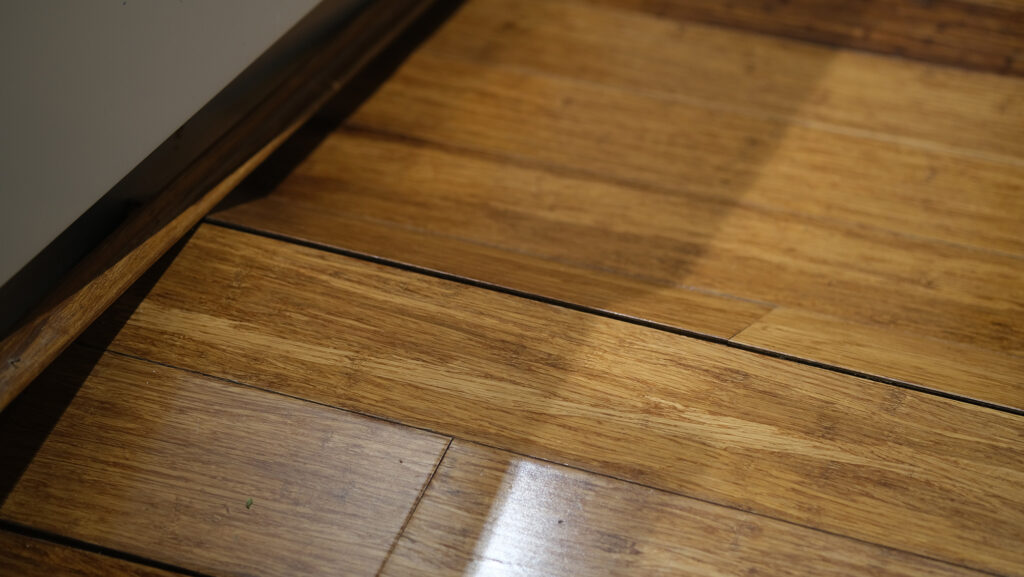
Because Sterling Carpet & Flooring has guided local homeowners through every season since 1962, we know that floor anxiety is common this time of year. The good news is that most November gapping is temporary. However, it is essential to distinguish harmless cosmetic movement from genuine dry stress.
Normal Seasonal Movement (Cosmetic)
- What it looks like: Uniform, hair-thin spaces (the thickness of a dime or less) distributed evenly across your floor, primarily along the long edges.
- What to do:Leave it alone. Do not attempt to caulk or fill these cracks with wood putty. When spring returns and relative humidity rises, the boards will naturally expand to their original dimensions. If you pack those spaces with filler during winter, the expanding planks will compress against the hardened putty, resulting in crushed board edges and permanent edge damage known as “edge-crushing.”
Dry-Cupping & Surface Checking (Action Required)
- What it looks like: If conditions become excessively arid (below 20% RH), the top wear layer of the wood dries out significantly faster than its underside. This creates tension that causes the plank edges to curl upward (dry-cupping) or results in fine, lengthwise splits running through the grain finish (surface checking).
- What to do: This is an environmental distress signal. The floor’s cellular structure is being pulled apart by lack of moisture. You need to actively add moisture back into the home’s air before micro-fractures compromise the factory finish.
We Recommend Stabilizing Your Indoor Climate
Protecting your hardwood investment through the winter months does not require complicated overhauls; it simply requires climate awareness and quality baseline craftsmanship.
Maintain a 35% to 55% Relative Humidity Target
- Deploy a Digital Hygrometer: Keep an inexpensive digital humidity monitor in the main living space. If indoor RH registers below 35%, your floors are losing water.
- Add Balanced Humidification: Running a standalone ultrasonic console humidifier in main living zones, or having an HVAC technician install an evaporative whole-home humidifier directly into your central ducting, balances your indoor air. This prevents plank shrinkage, reduces static electricity, and protects solid wood cabinetry and trim alike.
- Mind the Registers: Ensure heating vents are angled away from blowing direct, hot airflow downward onto exposed plank surfaces.
The Value of Tenured, Licensed Installation Standards
A floor’s ability to survive seasonal movement begins on day one. When our licensed, tenured Sterling’s hardwood flooring installation teams fit a solid or engineered hardwood floor, they follow strict manufacturer guidelines:
- Acclimation Testing: We verify the moisture content of both the subfloor and the wood planks using calibrated pin meters before a single board is set.
- Perimeter Expansion Gaps: Wood must breathe. Our installers leave proper perimeter expansion space concealed beneath baseboards and shoe moulding around every wall and vertical obstruction. This ensures that when spring warmth and coastal breezes replenish moisture, your floor expands freely without binding, tenting, or buckling.
Shop New Hardwood Flooring & Get Quality Hardwood Installation Services at Sterling Carpet & Flooring
Natural wood possesses character, depth, and lasting value precisely because it is an authentic natural material. Seasonal expansion and contraction are part of its living story, not a defect.
If you are noticing wide, irregular gaps, hearing unusual popping sounds, or weighing whether engineered hardwood or rigid-core alternatives might better handle your home’s unique layout, we are here to help.
As the original flooring store on Orange County’s famed tile mile and the first Shaw Flooring Gallery in North America, our family-owned team brings unmatched product selection and over six decades of hands-on experience to every project.
Call or Visit one of our showrooms today!
Service Areas: Mission Viejo, Ladera Ranch, Lake Forest, Irvine, Laguna Beach, Laguna Niguel, Aliso Viejo, Orange, Anaheim, Yorba Linda, Fullerton, Newport Beach, Costa Mesa, Huntington Beach, and Corona.
Hardwood Gapping Frequently Asked Questions
Q: Why did spaces suddenly appear between my hardwood planks when the furnace kicked on?
A: Natural hardwood is hygroscopic, meaning it constantly adjusts its internal moisture content to match the surrounding air.
When late fall temperatures drop in inland areas like Anaheim Hills, Yorba Linda, and Corona, running central heating, especially alongside dry Santa Ana winds, causes indoor relative humidity to plummet from a balanced 45%–55% down to desert levels.
Planks surrender their bound moisture and contract across the grain, creating temporary seasonal gaps.
Q: Should I fill the winter gaps in my hardwood floor with wood putty or caulk?
A: No. Filling normal seasonal gaps with wood filler or putty is one of the most common and costly mistakes homeowners make. When winter ends and spring brings coastal moisture back into the home, your planks naturally expand back to their original size.
If those gaps are packed with hardened filler, the expanding wood will compress against it, causing permanent damage known as “edge-crushing” or board buckling.
Q: How do I prevent “furnace shock” and dry floor damage in my home?
A: NKeep an inexpensive digital hygrometer in your main living space and aim to maintain indoor relative humidity between 35% and 55%.
Running a standalone humidifier or installing an HVAC-integrated whole-home system reintroduces the moisture your wood needs, preventing severe dry-cupping and finish checking.
Ensuring your heating vents do not blast hot air directly onto the floor also protects the wood’s surface. If you are unsure whether your floor’s movement is normal, Sterling’s specialists at our Anaheim and Mission Viejo showrooms can inspect photos or samples and offer professional guidance.